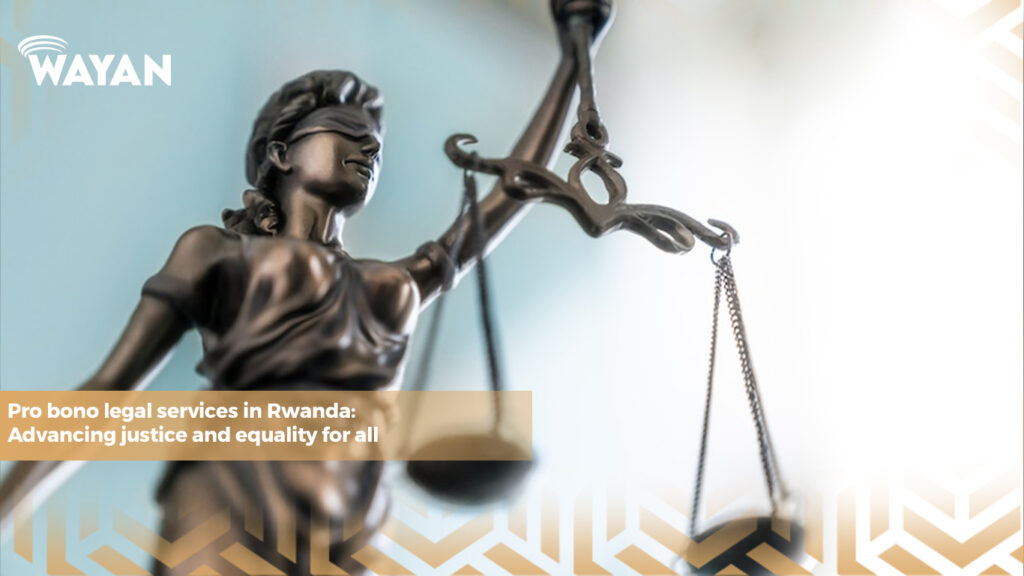
Pro bono legal services in Rwanda: Advancing justice and equality for all
Pro bono legal services in Rwanda play a crucial role in ensuring that vulnerable communities can access justice, legal protection, and equal treatment under the law. In a country where many individuals face socioeconomic challenges that prevent them from affording legal assistance, pro bono work bridges the gap between rights and real access. At WAYAN Ltd Rwanda, providing legal aid for vulnerable communities, delivering human rights legal support, and helping individuals understand how to access free legal representation in Rwanda forms part of our commitment to justice and sustainable development.
Pro bono legal services in Rwanda: Supporting vulnerable communities through accessible justice
Pro bono legal services in Rwanda continue to be a vital mechanism for addressing inequalities within the justice system. Many vulnerable individuals, including low-income families, persons with disabilities, women, children, genocide survivors, refugees, and marginalized groups, often face legal challenges yet lack the means to hire legal representation.
WAYAN Ltd Rwanda provides comprehensive legal aid Rwanda initiatives that ensure access to justice is not determined by financial capability. These services include advising on criminal and civil matters, supporting victims of gender-based violence, assisting with immigration or refugee-related cases, and offering guidance on land disputes one of the most common legal issues in Rwanda. Pro bono work also extends to drafting legal documents, representing clients in court, and offering alternative dispute resolution to help communities solve conflicts peacefully.
Legal aid Rwanda for vulnerable communities is not only a social responsibility but a necessity for promoting national stability and fairness. Without such assistance, many individuals would face unjust outcomes simply because they could not afford legal expertise. WAYAN’s legal teams dedicate their expertise to ensure that even the most marginalized groups receive the quality legal service required for protection and empowerment.
Beyond individual cases, WAYAN Ltd Rwanda engages in community legal education programs that help people understand their rights, legal pathways, and compliance processes. These sessions build a stronger and more informed society where individuals can advocate for themselves. Through a combination of legal representation, awareness, and advocacy, pro bono legal services strengthen social cohesion, reduce inequalities, and uphold Rwanda’s commitment to a fair judicial system.
Legal aid Rwanda for vulnerable communities: Expanding access through structured pro bono frameworks
Legal aid Rwanda for vulnerable communities is an essential pillar in ensuring justice is accessible for everyone, regardless of social or financial position. WAYAN Ltd Rwanda has developed a structured framework that integrates legal assistance with community engagement and long-term impact. This framework ensures that individuals who require legal help are not only supported in their cases but are also empowered with knowledge and resources that can help them avoid future legal complications.
A critical part of this framework involves identifying vulnerable individuals and groups who are most at risk of being excluded from the justice system. These include indigent families, rural populations, informal workers, orphans, internally displaced persons, and survivors of domestic or gender-based violence. WAYAN’s pro bono legal services offer these groups comprehensive support by providing clear legal guidance, representation, and follow-ups. The aim is not merely to resolve one issue but to build resilience and understanding within communities.
Community outreach programs are a major part of the legal aid Rwanda strategy, where WAYAN collaborates with local authorities, NGOs, and community leaders to identify legal needs early. Through these partnerships, the firm helps reduce the backlog of unresolved cases, ensures faster access to legal remedies, and enhances public trust in Rwanda’s justice system.
Additionally, WAYAN’s lawyers provide legal literacy workshops that explain rights related to labor laws, family law, land rights, commercial contracts, and human rights protections. By strengthening community awareness, individuals become better equipped to recognize violations and seek timely legal help.
Through structured pro bono legal aid processes, vulnerable communities gain more than case-specific support they gain hope, equal opportunity, and long-term legal empowerment.
How to access free legal representation in Rwanda: A clear guide for vulnerable individuals
Understanding how to access free legal representation in Rwanda is essential for those who may not know where to begin when facing legal challenges. WAYAN Ltd Rwanda ensures that the process is transparent, simplified, and accessible to anyone needing support. Accessing pro bono services typically starts with a community referral, direct application, or identification by a local authority or organization that recognizes an individual’s need for legal help.
The first step for many individuals is to visit a local government office, legal aid clinic, community center, or WAYAN’s pro bono desk, where trained legal advisors conduct an initial assessment. This assessment helps determine whether the individual qualifies for free legal representation based on vulnerability, income, case urgency, and potential human rights implications.
Once accepted, clients are paired with a pro bono lawyer who provides full legal guidance, from counseling to case preparation, negotiation, and representation in court. For individuals involved in serious legal matters such as GBV, land disputes, or child protection issues, WAYAN ensures priority handling and works closely with social support services to guarantee comprehensive care.
WAYAN also provides digital access through online consultation forms, for individuals in remote areas who may lack transport to physical offices. This system ensures inclusivity across Rwanda’s diverse communities. Refugees and migrants can also access assistance through specialized legal support sessions conducted in collaboration with humanitarian partners.
Understanding the procedures, required documents, and timelines helps clients engage confidently in their legal processes. By breaking down barriers to justice, WAYAN helps ensure that no individual is left without protection simply due to financial constraints.
Rwanda pro bono human rights lawyers support: Strengthening justice and promoting equality
Rwanda pro bono human rights lawyers support is essential in safeguarding fundamental freedoms, protecting vulnerable populations, and addressing injustices that affect individuals and communities. WAYAN Ltd Rwanda takes a rights-based approach to its pro bono initiatives, ensuring that clients receive legal support that aligns with national laws and international human rights standards.
Human rights cases often involve sensitive issues such as wrongful detention, discrimination, property violations, labor exploitation, domestic violence, and child protection concerns. WAYAN’s lawyers intervene to ensure fairness, transparency, and accountability throughout the legal process. They also work closely with civil society organizations, local communities, and state institutions to strengthen mechanisms that protect individual rights.
WAYAN’s commitment includes monitoring human rights violations, advocating for fair treatment, and offering representation in court when needed. The firm also supports individuals navigating social justice challenges, including gender rights, disability rights, and access to public services. WAYAN believes that defending human rights is not only a legal obligation but a moral responsibility that contributes to Rwanda’s progress as a nation of equality and dignity.
By providing pro bono support in this area, WAYAN strengthens national capacity to uphold justice and ensures that vulnerable individuals receive protection regardless of their economic situation. This work continues to empower communities, influence positive reforms, and uphold the principles of fairness and equality for all.